 Global Dentistry
Can Stress Cause Tooth Pain? The Link Between Stress and Dental Health
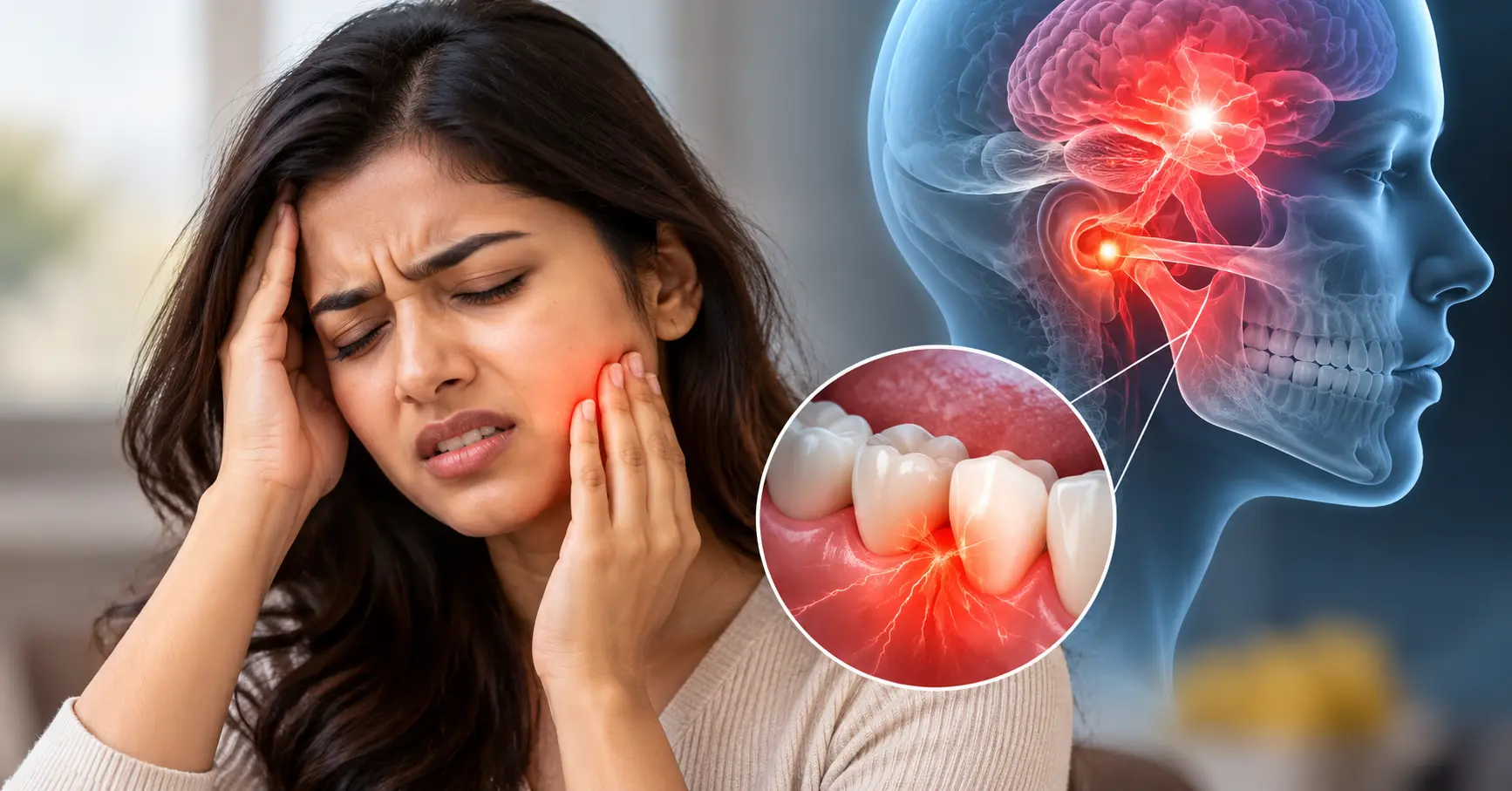
You’ve examined your mouth for any obvious injuries. You haven’t found anything broken or damaged. You can’t find any explanation for why you have an aching jaw and sensitive teeth other than the fact that you have been under quite a bit of stress recently.
The question becomes clear – is it possible for stress to actually induce tooth pain?
The answer is yes, and the link between stress and dental pain has been clinically studied more extensively than many people realize.
Stress doesn’t lead to tooth pain directly, because it doesn’t affect your teeth chemically, but there are many ways through which it causes tooth pain.
This article will explain those ways and help you understand when tooth pain may be stress-induced and when you should definitely visit a dentist.
| Quick Answer
Yes, because there are many ways that stress can lead to pain in the teeth. For instance, stress can result in teeth grinding and clenching of the jaw (also referred to as bruxism), stress of the temporomandibular joint (TMJ), enhanced pain sensitivity due to anxiety, and inflammation of the mouth because of stress. However, stress cannot take the place of other reasons for pain in the teeth, such as decay, fracture, infections, and gum disease. |
How Stress Affects Your Teeth and Jaw
There are physiological changes in the body caused by stress that directly affect the mouth, jaw, and teeth. It is important to understand how each one works to understand how stress causes dental pain.
Bruxism: Teeth Grinding and Jaw Clenching
Bruxism is one of the most prevalent and destructive forms of stress-related damage to oral health. It involves the unconscious grinding and clenching of the teeth and usually occurs while sleeping; it can, however, happen in times of extreme concentration and stress during the day.
The strength of the process occurring in bruxism exceeds considerably that of normal mastication. Gradually – and sometimes in as little as a few months of heavy grinding – this leads to:
- Dental surfaces becoming flat and worn, thus resulting in thinning of enamel
- Increased sensitivity of teeth to temperature changes and sweet foods
- Painful teeth, whose origin cannot be determined precisely since it feels like the pain originates from several teeth at once
- Cracked and chipped teeth, even if there was no single reason for such a change
- Muscle tiredness, pain, and soreness when waking up
The vast majority of people suffering from bruxism have no idea about their problem until a dentist finds the signs of wear on their teeth or if someone notices the grinding noises during the night.
TMJ (Temporomandibular Joint) Dysfunction
The temporomandibular joint is what links your jaw to your skull — you will feel it right near your ear whenever you open and close your mouth. Stress-induced clenching and grinding of your jaws affect these joints and the muscles associated with them, causing a condition known as temporomandibular joint dysfunction or TMD.
TMJ disorder causes the following symptoms:
- Pain or soreness of the joint of the jaw, the ear, or the temple
- Clicking, popping, or grinding noises while moving the mouth
- Difficulty opening the mouth wide or the sensation that the jaw is stuck
- Headaches, especially upon waking up and during high levels of stress
- Pain spreading out to the neck and shoulder
Since some of the pain is experienced around the area of the teeth, it may often be confused with a tooth ache caused by a dental problem since TMD pain occurs predominantly in the morning along with the tooth pain from a cavity or abscess.
Heightened Pain Sensitivity
Anxiety or chronic stress changes the way that your brain processes the pain signal.
Patients who experience stress and anxiety tend to have an increased pain threshold and sensitivity to the pain that otherwise would not have even been felt.
What happens is that when there is some irritation in your mouth, for example, a slightly swollen area around the tooth or a tiny crack, it would be felt more intensely if you happen to be stressed at the moment. It does not mean that the patient is exaggerating or imagining the pain.
Stress, Immunity, and Oral Inflammation
Chronic stress negatively impacts the body’s immune system. This results in a physiological effect within the mouth, whereby reduced immune monitoring leads to better colonization of bacteria within the gums, causing gingivitis and aggravating an existing condition. High levels of cortisol (stress hormone) have been shown to cause increased levels of inflammation of the periodontal tissues.
Gingivitis and early-stage gingivitis result in the sensitivity of gums and teeth around them.
Stress and Neglecting Oral Health
However, there is also another route through which stress causes pain in the teeth, and this is indirect. When someone is going through a period of stress, they are likely to put off going to the dentist’s clinic, brush less frequently, eat foods and beverages that are acidic and/or sweet, drink more alcohol, smoke more often, and grind their teeth unconsciously.
This means that in such a situation, the individual will be going through a period when they have bruxism and poor dental hygiene.
How to Tell If Tooth Pain Might Be Stress-Related
There is no single symptom that can clearly define that the cause of pain in the tooth is psychological rather than structural, and that can only be determined by a dentist. Some common patterns which indicate stress-related dental problems include:
| Feature | More likely stress-related | Needs urgent dental assessment |
| Pain pattern | Vague and difficult to pinpoint; multiple teeth hurting at once | Sharp, localised, constant; clearly coming from one tooth |
| Timing | Occurs mostly in the mornings or when stressed | Constant or worsening regardless of time or situation |
| Associated symptoms | Jaw tightness, headache, tension in facial and neck muscles | Swelling, fever, visible damage, bad taste, bleeding |
| Response to stress reduction | Improves with relaxation and absence from stressful conditions | Does not change with stress levels |
| Duration | Varies according to stress | Progressive — not improving over days |
What Can Be Done About Stress-Related Dental Pain?
Occlusal Splint (Night Guard)
The best solution clinically to treat bruxism is a custom night guard made by a dentist. This is used during sleep and shields your teeth from the forces of grinding. This will protect your enamel from wearing out and will decrease the pressure on your TMJ. Within a few weeks of using the custom night guard, you will experience less jaw pain and morning headaches.
There are mouthguards available that you can buy from a pharmacy, but those are not as accurate and comfortable as those fitted by a dentist.
Address the Stress
Managing the stress itself is both the easy and important part. Physical exercise, getting sufficient sleep, minimizing consumption of caffeine (since it aggravates the condition), and psychological counseling when necessary all contribute to lowering the stress response that causes jaw clenching and grinding.
Dental Review and Treatment
A dental examination is very important, not only for diagnosing stress-induced damage but also for ruling out any other possible structural problems. We at Global Dentistry in Perumbakkam, Chennai, receive many patients from Medavakkam, Ottiyambakkam, Sithalapakkam and neighboring regions who have been complaining of pain resulting from stress, due to some dental problem, or even both.
The most important thing is to diagnose the problem before any form of treatment can be done. In some cases, a tooth that is already cracked or damaged by bruxism has to undergo restoration and use of a night guard as well.
When Should You See a Dentist for Stress-Related Tooth Pain?
Visit your dentist if you experience any of the following:
- Pain in the jaw or headaches when waking up that were not there before
- Evident wearing down, chipping, or flattening of tooth enamel
- Increased sensitivity of teeth for no reason at all
- Difficulty in moving your jaw, or clicking sounds in your mouth
- Pain in your teeth that lasts for several days despite stress being an apparent factor here
Do not assume tooth pain is simply because of stress. When structural problems with your teeth are diagnosed along with stress factors, they must be dealt with separately, and diagnosis early on makes things easier and cheaper in the end.
Frequently Asked Questions (FAQ)
Q1: Can stress really cause tooth pain?
Yes – through multiple ways. Teeth grinding (bruxism) in sleep or due to stress results in wear, increased sensitivity, and aching of the teeth. Jaw clenching affects temporomandibular joint resulting in pain extending to the teeth and jaw. Also, stress reduces the pain threshold and lowers the immune response in the gums resulting in increased inflammation. Persistent toothache requires an assessment by the dentist.
Q2: What is bruxism and how does stress cause it?
Bruxism involves the grinding or clenching of teeth. This is involuntary and typically occurs during sleep. Stress and anxiety raise physiological arousal levels in the body. This remains high even during sleep leading to the activation of jaw muscles. The forces generated during bruxism are much higher compared to those exerted during normal chewing.
Q3: How do I know if I have TMJ problems?
Typical signs of temporomandibular joint dysfunction include pain and aching in the jaw, especially at the ear and temple areas, clicks and pops when opening and closing the mouth, limited opening of the mouth, morning jaw stiffness, and headache. These symptoms get aggravated during stressful times. Your dentist can perform tests on the jaw joint and the bite to diagnose this condition.
Q4: Does a night guard help with stress-related tooth pain?
Yes, a custom-made night guard (occlusal splint) is an effective remedy in such cases, as it can protect teeth from the damaging effects of bruxism. It provides cushioning against the harmful grinding forces, prevents enamel wear and excessive jaw joint strain, and usually results in reduced jaw pain and headaches within three weeks after using it. Custom-made splints are recommended over the over-the-counter versions because of a better fit and individualized adjustments.
Q5: When should I see a dentist in Chennai for tooth pain that might be stress-related?
If you have any of the following symptoms — jaw pain or morning headaches, increased tooth sensitivity, jaw sounds, changes in the appearance of your teeth, and prolonged toothache — you should see a dentist. But don’t be misled into thinking that all the tooth pain in a stressful time is stress-related, as it may indicate other problems such as a cavity, a crack, or an infection. Global Dentistry works with people from Medavakkam, Ottiyambakkam, Sithalapakkam, and South Chennai.
|
Are You Suffering from Toothache and Jaw Pain in Chennai? Global Dentistry at Perumbakkam specializes in dental check-ups for – TMJ diagnosis and bruxism treatment as well as restorative & preventive procedures. Serving Perumbakkam, Medavakkam, Ottiyambakkam, Sithalapakkam & South Chennai. |